
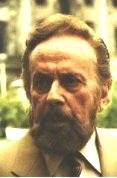
View: Ritsos Poems
Ritsos, Yannis, 1909 – 90, Greek poet. One of modern Greece’s most widely translated poets, Ritsos moved from an early concern with classical themes and style to a more deeply personal lyricism. His writing reflects family tragedies, a stay in a tuberculosis ward, and his political engagement against dictatorship that earned him periods of deportation and house arrest.
He served time in prison camps during 1947-1952 and after the 1967 coup, thence living under house arrest or surveillance. He took moral power from his poems, and spoke of political enemies with compassion rather than bitterness.
|
Some of his best known works include: Tractor (1934), and Pyramids (1935) These two works achieve a fragile balance between faith in the future, founded on the Communist ideal, and personal despair. Epitaph (1936). This was a lengthy poem which uses the mechanics of traditional poetry but expresses in a clear and simple language a message of fraternity and brotherhood |
Vigil (1941-1953), and Districts of the world (1949-1951). These were written from his experiences in prison camps which occured becuase of the Greek civil war and his stance against the Fascists
Later works marked Ritsos’ devlopment and maturity as a Poet:
The Moonlight-Sonata (1956) – When comes the Stranger (1958), The Old Women and the Sea (1958),
The dead House (1959-1962) This is a long monologue partly inspired by the ancient Greek mythology and the ancient tragedies:
A characteristic of his latest poems such as: Late in the night (1987-1989) is that they are filled with sadness and the awareness of suffering. But in a humbly poetic way Ritsos preserves a gleam of hope in an ultimate start of creativeness.
Sources: Yannis Ritsos biography
View: Ritsos Poems